Candes Saint-Martin, my favourite spot in La Touraine.

Sunday, 29 November 2009

La Fête du Pain

This topic goes back to 2007 when we lived our first B&B experience outside the Loire Valley.

On the way back from our early autumn trip to the Alsace in 2007, we made an overnight stop in the village of Saint-Hubert in the Moselle department. I had booked a room at a B&B called ‘la Ferme de Godechure’. It turned out to be a splendid authentic farmhouse. The owners, an architect and his wife, who live in the main building, have completely renovated one of the side buildings. On the top floor, there are four spacious rooms. On the ground floor, a cosy living and dining room and a fully equipped kitchen are at the guests’ disposal. One of the doors in the living room gives access to a large, bright relaxation room with a sauna, a Jacuzzi and a walk-in shower.


La Ferme de Godechure in St. Hubert (France)

The Farm is set in the middle of the countryside and there are no immediate neighbours. Arriving at 3 o’clock in the afternoon, we found the gate into the farmyard closed and locked. Nothing stirred when we rang the bell. After three attempts we gave up and decided to drive to the nearby village to see if we could get some information there. We found it very much deserted too, except for an old man sitting on a bench. We asked him where everybody had gone. “Ils sont tous à la Fête du Pain” (They’re all at the Bread Festival) he replied and pointed at a poster on the village information board. We took a closer look and learned that the annual ‘Fête du Pain’ was celebrated that particular Sunday in the 12th century Abbey of Villers Bettnach on the other side of the village.

We thanked the man and conferred for a while. Having little else to do till 5 p.m., the usual time of arrival when staying at a B&B, we went looking for the Abbey. The ‘Fête du Pain’ turned out to be THE annual event in Saint-Hubert and THE place to be. A large wheat field that had already been harvested had been turned into a parking lot that was packed with cars. From the Abbey’s chapel came the sound of jazz music, which was obviously being played life, as an enthusiastic crowd started applauding when the tune ended. On the road leading to the entrance of the old abbey, a flea market was in full swing.

'La Fête du Pain' - Notice the beer stand in the back!

On the lawn behind the entrance, long tables and benches had been set up where the villagers were merrily drinking beer and wine. The five or six men manning the drinks’ stand were trying to keep up with the demand. In the far end corner the last embers of a barbecue were dying under two large pork bones of which all the meat had been carved. From the old kitchen buildings came the tantalizing aroma of freshly baked bread and pancakes.

We managed to get a beer and sat down at one of the large tables. We asked our neighbour whether he knew Mr. and Mrs. F. the owners of the B&B. He didn’t, but said that the mayor – one of the men in charge of the drinks’ stand – probably would. To make a long story short, we learned that Mr. and Mrs. F. were on holiday, but that a janitor was running the place until their return. The janitor had left the Fête only 10 minutes ago as “some Belgians were arriving that afternoon” … Well, that would be us, we said.

We still had some time to spare and decided to have a pancake before driving back to the farm. When we got there, the gate was open and a friendly yellow Labrador came running towards us, wagging his tail. The janitor, a man in his forties, came out of the house and showed us to our room. We unpacked our things for the night and enjoyed a relaxing moment in the Jacuzzi. Outside it was still pleasantly warm and we decided to take our bottle of red wine outside where we sat on the lawn, sipping wine and taking in the last rays of sunshine.

Later that evening we had a light picnic supper in the dining room. The next morning we were greeted by a young lady who served us a delicious breakfast of melon slices, different kinds of cheese, jam and freshly baked pancakes. The pancakes tasted familiar. “I bet they do,” the young lady said with a smile. “I made the pancakes that you had yesterday at the Fête du Pain. I saw you there and I heard that you had been enquiring about Mr. and Mrs. F. So I immediately knew I would be seeing you here this morning.” It’s a small world, isn’t it?

La Ferme de Godechure
Rue Principale
57640 Saint-Hubert
Lorraine - Moselle
Tel: + 33 3 87 77 03 96

* * * * *

By the way, did you know that there are 10 villages by the name of Saint-Hubert, scattered all over France? There’s also a town by the same name in the province of Luxembourg, in Belgium. Enough to confuse your car’s GPS system!

____

Saturday, 28 November 2009

La Pagode de Chanteloup

On the outskirts of Amboise, when taking the D31 in the direction of Bléré, you’ll see a signpost indicating the ‘Pagode de Chanteloup’. Over the last few years we had noticed this post on several occasions but important road works had turned the entrance to the grounds into a gigantic building site.

Last year, however, the road works were finished and the monster trucks and bulldozers had gone. The parking lot was once again accessible and we decided to pay the place a visit.

Although the internet site promised a lot of interesting and entertaining activities such as boat rides on the pond at the foot of the Pagode and gourmet picnic hampers to be enjoyed on the vast green lawns, the actual site had clearly suffered from the lack of visitors, and had apparently been somewhat neglected. When we arrived at the ticketing office, the place looked deserted. The young lady behind the desk was obviously relieved that finally someone had turned up and that her day at work was not a complete waste of time.

She immediately informed us that there would be no boat rides for a while as, due the recent long dry spells, the ground water had gone down to a level that was insufficient to naturally supply the pond with the necessary water. Moreover, the lack of water had also destabilized the foundations of the Pagode, which was beginning to look like the leaning tower of Pisa. For security reasons, only the first floor of the six floors high Pagode was open to the public.


The 'leaning' Pagode of Chanteloup

In spite of these restrictions, we nevertheless decided to take a look around. The Pagode, which was built between 1775 and 1778, is the only remaining edifice of what was once the sumptuous Château of the Duke of Choiseul. Etienne François de Choiseul (1719 – 1785) was a well respected military officer, diplomat and statesman in the service of Louis XV. However, he somehow managed to displease the king’s mistress, Mme Du Barry, and was exiled to Amboise. During his military and diplomatic career, and because of the many intrigues he had been involved in, he was very well known and had many friends. The Duke’s Palace at Amboise, became the favourite meeting place of the great of the earth.


In an attempt to outshine the king, Choiseul embellished his palace to the point that it became even more grand and beautiful than the king's prestigious residence in Versailles.


After Choiseul’s death in 1785, his widow, the beautiful Louise Honorine, daughter of the Marquis de Châtel, sold the palace. It was completely demolished in 1823 by the ‘Bande Noire’, a notorious group of stealing and scheming ‘brocanteurs’ who unscrupulously sold the furnishings and building stones of the Château to the highest bidders.

In the remaining ‘Pavillon du Concierge’ copies of old plans and drawings give the visitor an idea of the splendour and beauty of the former Château. In 2008, there was another temporary exhibition of oriental furniture going on in a side building. It reflected the spirit of the 18th century in which the Pagode was built, as ‘Chinoiseries’ were very much in vogue in those days.

When we left, a coach bus full of tourists had arrived at the entrance gate. The young lady at the reception desk was in for a surprise!

____

Friday, 27 November 2009

Stormy weather

Right now, we’re having some very windy and even stormy weather. Last Sunday gales blew up to 90 km per hour in and around Brussels and even up to 100 km per hour and more in the coastal areas. There was important damage to houses and in some areas roads were blocked by trees that had been blown over. And it looks like we are in for more bad weather during the coming days.

These storms remind me of a weekend trip we made in the spring of 2008 to the Somme Bay on the Northern French coast. We stayed for two nights in a self-catering loft in the old town of Saint-Valérie-sur-Somme. It was located on the top floor of a former boat house. The owner of the building, an antiquarian who had a shop in the town’s centre, used the ground floor as a workshop.

The loft was very spacious, with two bedrooms, a bathroom and a shower room, an open, what we like to call ‘American’, kitchen and a large open living space with floor-to-ceiling windows overlooking the rooftops of the old town. There was a solid wooden dining table seating eight people and three comfortable couches. The room was decorated with numerous items that obviously had had a previous life in some other people’s homes! The large kitchen cupboard offered a varied and non matching collection of plates and cutlery.


The spacious living room with on the left the 'American' kitchen.

There was no TV set, but two old gramophones that were clearly dating from the sixties and seventies. A vast collection of 45 and 33 vinyl records – ranging from Edith Piaf and Claude François to Paul Anka and Frank Sinatra - provided the necessary musical entertainment.

The first evening and night in these unusual settings were pleasant yet uneventful. On the second day of our stay we drove to Dieppe, where we had lunch and a walk along the seafront. By the time we left Dieppe the wind was blowing rather strongly. The dark clouds that were moving in from over the sea indicated that a storm was brewing. Back in Saint-Valéry-sur-Somme big drops of rain started to fall and we cut short our walk along the estuary.

In our cosy loft we had a meal of langoustines, cheese, baguette and wine. We listened to some music before turning in at about 10 p.m. as the sea air had made us sleepy. We left a small light on in the bathroom and settled in for the night. Some two hours later we were woken by the sound of the wind howling through the rafters of the old roof. The whole building was shaking and the large wooden door leading into the workshop on the ground floor was creaking noisily. It was as if the wooden planking of the floor of the loft was  being pushed upwards each time a new wind gust struck the building.


Somme Bay - beach at Le Crotoy

And then … there was a big ‘BANG’ and the light in the bathroom went out, leaving the loft in complete darkness. While I cowardly stayed in bed, my friend bravely went looking for the main switch. Lit by the light produced by the little flame of his lighter – for once having a man who smokes was a blessing – he carefully made his way towards the fuse box (luckily the proprietor had shown us were it was). The vibrations caused by the wind gusts had caused the main switch to turn itself off. My friend switched it on and the light in the bathroom lit up again.

Before driving home the next morning, we dropped in at the antiquarian’s house to hand back the keys of the loft. When we told him that the lights had gone out because of the violent storm, he looked surprised. “What storm?” he enquired innocently. Apparently the inhabitants of Saint-Valéry-sur-Somme were used to worse weather conditions than the ‘little gale’ of the previous night.

____

Thursday, 26 November 2009

Shopping in France

Don’t you just love shopping in France? As far as fashion is concerned, trends are always a year ahead and - in general and compared to Belgian standards - clothes are less expensive.

I have a weak spot for accessories: scarves, handbags, (fake, yet handmade) jewellery, kitchen wear and table decorations. My friend knows that I get very easily carried away when it comes to shopping. He therefore generally tries to steer me the other way each time we approach a shop selling these items. Sometimes, however, when he likes the object too, he will buy it for me.


My favourite shop is located in one of the outbuildings in the grounds of the Château de Villandry, which is mainly known for its impressive and unique gardens. This shop specializes in a vast choice of handmade jewellery and other objects that have been created by local artists. One of the most amazing items I ever saw there was a necktie made of … wood! Depending on what you’re buying, prices are very reasonable. This really is the place to be if you are looking for a nice and original present from France or when you want to treat yourself to a unique handmade piece of jewellery or any other decorative object.

But there are more shops like this in the Loire Valley. Like the one next to the entrance of the Château d’Ussé. A narrow door leads into a labyrinth of rooms with low, beamed ceilings. The shop’s assortment is varied and the place looks a bit like Ali Baba’s cave: scarves, handmade necklaces, earrings and bracelets, clocks, kitchen towels and decorative paper and linen napkins, nicely wrapped bars of soap, shampoo, shower gel, colourful plates, cups and cutlery, garden ornaments … You just name it, they’ve got it!


And then, last June, we discovered this attractive shop with its unusual outdoor display. It’s located along the narrow main street of Candes Saint-Martin. Unfortunately, the romantic bench didn’t fit in the boot of the car … so we left is just were it was for other tourists to admire!

____

Wednesday, 25 November 2009

Silent Wednesday

July 2009
Seen in the Belgian Gaume region, near the French border:
a hollow tree has been turned into an original bus shelter!
Looks like something out of a fairy tale, doesn't it?
(Click on the photo to enlarge)
____

Tuesday, 24 November 2009

Belgian chocolates

Belgian chocolates are undoubtedly Belgium’s best known export product – apart from beer, perhaps. When I ‘m travelling abroad, I’m always surprised by the many specialized franchised shops selling our national specialty. Leonidas, Godiva, Jef de Bruges, Neuhaus … These are the most common brands you’ll find outside of Belgium. The best of these is certainly Neuhaus, as it’s the least industrialized of them all.

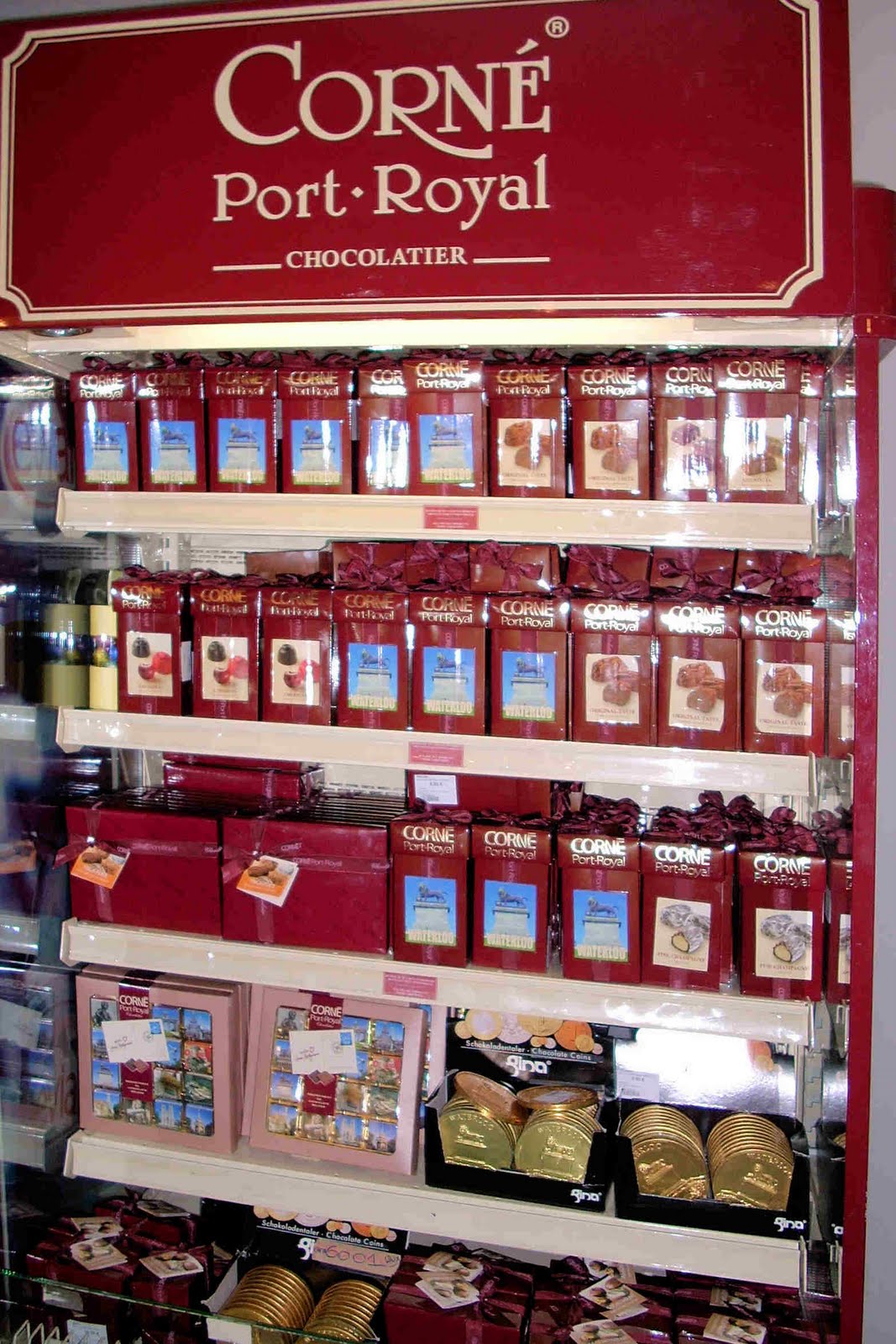
The absolute top brand, however, is Corné. This ‘chocolatier’ only uses the best ingredients and the handmade chocolates often have a smooth filling of flavoured butter or whipped cream. You should stock them in a cool place and eat them within 10 days after buying them. Otherwise the fresh and delicate filling will turn bad. For most people, however, this time limit doesn’t seem to be a problem, as the chocolates are so delicious.


I remember offering a ‘ballotin’ (the special box in which the chocolates are packed) of 1 kilogram to my second ‘mum’ R., who lives in Deal, Kent and at whose house I spent several summer holidays when I was a teenager. It was in July 1981, and the whole nation was ‘scotched’ to its television screen watching the wedding of the Prince of Wales to Lady Diana Spencer. R. had her neighbour and friend S. in to watch the event with us. By the time Diana had become Princess of Wales, the contents of the ‘ballotin’ had shrunk by half.

When buying a ‘ballotin’ of Belgian chocolates, avoid the pre-packed boxes, as there is no way of telling how long they have been sitting on the store shelves. Ask the saleslady to compose your own assortment, choosing from the bulk chocolates on the trays behind the glass counter. That way you can pick the flavours you like best and have the guarantee that your chocolates are nice and fresh. Avoid chocolates that have a whitish shine to them. This means that they have been exposed to the air too long and that the sugars in the chocolate have started to crystallize. They won’t make you sick nor will they kill you, but they have lost their typical and original chocolate flavour. No sense wasting money on them.


The famous 'Manon', although this photo doesn't do it justice!

I’ve noticed that a lot of people have an outspoken preference for the so-called ‘Manon’. The classic Manon has a filling of grilled hazelnut and butter cream with a mild coffee flavour. It is coated in white chocolate. Unless you make yourself a selection from the vast assortment most shops have to offer, a ballotin only contains one or two Manons. If you like ‘Manons’ and you’re the first one to chose a chocolate from a newly opened ‘ballotin’ it’s extremely bad manners to pick the one and only Manon without enquiring first if someone else is interested. In most cases people will gallantly reply: “Of course not. Go ahead.” But in their minds they will be cursing you for ‘stealing’ THEIR ‘Manon’ … unless that other person is me … because I don’t especially like them. Give me a good, slightly bitter-sweet dark chocolate anytime!

____

Saturday, 21 November 2009

Normandy – epilogue

By the time we had finished our snack lunch at l’Huitrière in Quiberville, a small crowd had gathered by the seafront. Curious as ever, we wanted to find out what was going on.

We left the restaurant and joined the group of people that was walking towards the small fish stalls along the road. From afar we saw a bunch of black flags sticking out over the stalls. What had happened? Had a fishing boat been reported missing or were the fishermen protesting against the limited EC quota for cod?


What do these flags stand for?


Even more cars and people were arriving. This was getting very intriguing! When we finally reached the fish stalls all became clear. No missing boat or strike … Apparently two of the local boats had just come in with their catch of the day, which they were unloading to be sold directly to the people who had been awaiting their arrival.

And the flags? They were just a bunch of signal flags, which the fishermen attach to their nets to indicate their position once they’ve been set out.

The assortment of fish that was being laid out by the fishermen’s wives was impressive and very varied: cod, plaice, small pinkish sea trout, mackerel, herring, whelks, etc. We were surprised to see the size of the cods, as these little boats fish close to the coast, and we always thought that large cods lived in the deeper waters.

And we learned another thing too. In Flemish cod is called ‘Kabeljauw’, which resembles the Portuguese ‘Bakelau’ which is salted, dried cod. In Belgium a cod is called ‘Cabillaud’ in French. In France, however, the fish - alive or before it is cut into slices – is called a ‘Morue’. Once it is cut into slices or fillets, it becomes a ‘Cabillaud’. Extraordinary, if you know that ‘Morue’ is the French name we use in Belgium for ‘Bakelau’. Are your still with me on this?

But back to the stalls! I asked one of the women selling the fish, whether it was okay if I took a photo. She had no objection, and here is the result.


We were tempted to buy some fresh fish for our supper later at the cottage, but with the stove being out of order we thought it better to stick to our fish soup, cheese, ham and goose ‘rillettes’ that we had bought the previous day in Dieppe.

We leisurely made our way back to Saint-Valéry-en-Caux, where we had a glass of champagne in the lounge bar of the local casino, watching the tide roll in. By the time we got to the cottage, the sun was going down and we settled in for another cosy evening in front of the open fire place.


Casino of  Saint-Valéry-en-Caux

The next morning around 10 a.m. we said goodbye to our hosts and drove back to Brussels, where we arrived at about 3 p.m., after a lunch stop just across the Belgian border.

Well, this was my last post in the series about the ‘Côte d’Albâtre’ in Normandy! Thank you for giving me the opportunity to share our short journey with you. Tomorrow we’ll return to everyday life here in Belgium. I hope you’ll join me then too.

____

Friday, 20 November 2009

Normandy – part 7

After our stroll along the Veules River and the sites of Veules-les-Roses it was time for lunch. On our way down we had noticed that many of the restaurants along the coast had already closed down for winter. There was one place, however, in the village of Quiberville flashing a big neon sign, indicating that the hotel-restaurant ‘L’Huitrière’ was ‘OPEN’.


'L'Huitrière' in Quiberville

The building looked like a sixties seaside boarding house, with a bar, a brasserie and a restaurant. The Menu card read:

Aujourd’hui (Today)
Hareng mariné ou fumé (Marinated or smoked herring)
Petit sale aux lentilles (slab of salted bacon with lentils)
12 euros

There were several cars parked in front of the building and inside we saw the waiter rushing around. We walked in and asked the young man behind the bar whether it was possible to have just a snack … not an entire menu. “Of course”, he replied and showed us to table in the bar section.

In the next room – the brasserie – a dozen of people were having the daily special. The marinated herring looked very appetizing, and my friend asked the waiter if he could just have the herring with some baguette, without the main course. This turned out to be no problem for our friendly waiter, who then enquired whether I would be having the herring too. As I’m not very fond of fish bones, and herrings are known for their many tiny bones – not unlike trout – I declined and ordered smoked salmon with warm toasted bread. We also ordered half a litre of dry white wine.

While we were waiting for our meal to be served, we looked around and discovered a large picture frame containing several faded black and white photographs of what looked like scenes from the Allied Invasion on the Normandy coast on June 6th, 1944. This slightly puzzled us as the invasion took place much further south along the coast. We took a closer look and saw that it concerned images of the Raid on Dieppe on August 19th, 1942. During this catastrophic attack 4,384 of the 6,068, mainly Canadian infantry soldiers, who tried to land on the beaches in and around Dieppe were killed, while none of the military objectives was accomplished.

On the seafront in Dieppe a monument has been erected to commemorate the soldiers that died that day in 1942. It consists of a metal column with a hole in the shape of a maple leaf. On August 19th, at the exact hour of day that the first troops tried to get on land, the sun shines through the hole, illuminating a metal plaque on the ground, on which another maple leaf is engraved. A moving and fitting tribute to the many soldiers who were killed during that fatale raid! We actually visited the monument last year during a day trip to Dieppe whilst staying in the Somme Bay.

While we were still looking at the faded photos the waiter brought our meal. The herring had been marinated in white wine with slices of carrot and onion and some spices. My friend said it was very good. My smoked salmon was tender and juicy and not too salty. The (nameless) white wine was very nice too.

By the time we had finished our meal, a small crowd had gathered on the seafront. Curious to know what was going on, we paid the waiter and went out to join the people who were obviously waiting for something …


(to be continued)

___

Thursday, 19 November 2009

Normandy – part 6

As mentioned in Tuesday’s post, I had found at the cottage a leaflet about the village of Veules-les-Roses, located between Dieppe and Saint-Valéry-en-Caux. It described ‘Le circuit du plus petit fleuve de France’ or Circuit of the ‘secret’ river, as the editor chose to translate it.

The English introduction of the leaflet reads as follows: “The Circuit of the ‘secret’ river allows one to discover the history and the heritage of the village in the course of a walk full of charm”.


On Tuesday morning we arrived in Veules shortly before 11 o’clock. We parked the car in the village centre, near the Saint Martin’s church. The square tower is all that remains of the original 12th-13th century building. The three naves, chancel and two chapels were rebuilt in the 16th century using the local sandstone. The church is now a ‘Monument historique’.


The village, which dates from the 4th century, was ‘discovered’ in 1826 by Anaïs Aubert, an actress of the Comédie Française. Soon the village became the favourite holiday destination of the rich and famous and Veules turned into a very desirable seaside resort. All through the 19th and the beginning of the 20th century sumptuous villas were erected in and around the village’s centre.

Last week, this villa was for sale. Anyone interested?


Eleven watermills are located along the mere 900 m long Veules River. In the past they were used for the production of rape seed oil. This activity strongly contributed to the wealth and fame of the village. The largest mill is called the ‘Moulin d’Anquetil’. Its wheel, which had been destroyed during the battle of Veules in June 1940, has been restored and today the mill is still in working order. This is more than can be said about the ‘Moulin de la Mer’ originally dating from the 12th century, which was situated at the mouth of the river, taking advantage of the energy produced by the incoming and outgoing tide. Today it has completely disappeared.


This is all that’s left of the Moulin de la Mer’!


In June 1940, at the beginning of the Second World War, Veules-les-Roses was the scene of the last battle in the Nazi offensive. In a final attempt to evacuate the last British, French and Belgian troops who had gathered on the beaches, several ships set out to pick up the stranded soldiers. One of the ships involved in the battle was ‘le Cérons’. Unfortunately, at low tide it got stuck in the sand. After a fierce battle the ship was sunk and captain and crew were captured by the enemy.


Later, two large guns from the ship were salvaged. They are now on display on the cliff overlooking the beach of Veules. On our way to Quiberville, where we had lunch, we stopped at the site to have a closer look at the guns and to enjoy the view.

We didn’t have enough time to take the complete tour described in the leaflet, but were nevertheless impressed and charmed by the many interesting things this tiny village has to offer. If ever you’re in Normandy, make sure to visit Veules-les-Roses as it is one of the most charming villages I’ve seen in this region.

(to be continued)

____

Tuesday, 17 November 2009

Normandy – part 5

On the second day of our stay in Normandy we decided to visit the town of Fécamp, some 35 km further down the coast. We had been there last March and had liked the fishing activity, the long ‘Quai Bérigny’ with its numerous shops and restaurants, as well as the ‘Palais Bénédictine’, a sumptuous late 19th- early 20th century ‘Palace’, where the famous French liqueur ‘Bénédictine’ is being distilled. This liqueur was invented in 1510 by a Bénédictine monk from the Abbey of Fécamp: Dom Bernardo Vincelli.

Nothing much happened with it until the end of the 19th century, when a wine merchant Alexandre Le Grand (what’s in a name??) took the old recipe and by adding some exotic spices that had been unknown in Europe in the 15th century, created a new liqueur that would become France’s ‘Ambassadeur du bon goût’ all over the world.


Palais Bénédictine - Fécamp


For a while we considered visiting the Palais Bénédictine again, as we had really liked it in March. The sumptuous Palace hosts several impressive and interesting exhibitions. You can take the guided tour, which will keep you occupied for about an hour and fifteen minutes, or wander around on your own, guided by a small yet very informative leaflet. The visit ends in the tasting hall where your entrance ticket entitles you to a free tasting of the Bénédictine or a cocktail using the liqueur as an ingredient. Before leaving the Palace, there is, of course, the mandatory stop at the gift shop. Personally, I am not a big fan of Bénédictine or any other liqueur for that matter, so during our visit in March I only bought a small bag of bonbons with a Bénédictine filling for my mother.


No legend required!


Finally we decided against a second visit and set out for the ‘Museum Terre-Neuvas’, depicting the lives of the adventurous and fearless mariners who, in extremely bad weather conditions, sail all the way to the boundaries of the ‘Grand Nord’ to fish for cod. Unfortunately, the museum is closed on Tuesdays and I only managed to shoot a few photos from the outside, as well as a picture of this curious statue of a faceless fisherman’s wife looking out over the sea, waiting for her husband to return from his dangerous journey.


Faceless fisherman's wife on the seafront in Fécamp

The museum being closed, we agreed on returning to Veules-les-Roses, where we had had lunch the day before and of which we had only seen the seafront. Earlier that morning, at the cottage, I had found a leaflet about the village. It contained a detailed itinerary leading you along the most important sites. It looked like an interesting way to explore the village.

(to be continued)

____

Monday, 16 November 2009

Technical Intermezzo

I'm posting a short intermezzo before continuing my series about our Normandy trip. Why?  Because, as part of my new laptop setup, I had a new wireless internet connexion installed, including a great number of international television chains ... and getting everything to work is quite a mindblowing experience. These things look great on paper, but once it comes to getting them to fonction properly ... you need a lot of patience and common sense ... things I seem to lack when I'm stressing.

While I'm struggling with the wiring, the television and decoder commands, etc. please enjoy this peaceful scene of the beach cabines at Yport on the Normandy coast.


I promise I'll be back tomorrow, unless I'm suffering from an internet nervous breakdown!

P.S. Maybe you have some experience with these all-in (telephone, internet surfing and television) solutions. If so, your tips and suggestions are more than welcome.


___

Sunday, 15 November 2009

Normandy – part 4

Led by ‘Mauricette’ our faithful GPS, we easily found the B&B ‘Nature et Lin’ which our favourite cottage is part of. The former linen farm, which offers 4 chambres d’hôtes and a self-catering cottage, is located in the village of Néville, some 7 km inland from Saint-Valéry-en-Caux, halfway between Dieppe and Etretat.

When we drove up to the main house, the lady of the house immediately came out to greet us. This was our second visit, so it was nice to see her again. While my friend drove the car around to the little private parking spot close to the cottage, which sits at about 30 meters from the main house, I walked with Mrs. G. to the ‘Maison des Ecureuils’ (The squirrels’ house) as the little cottage is called. In the air I could smell the scent of a wood fire burning. When Mrs. G. opened the door that led into the cottage, I knew immediately where the scent came from. The fire in the open fire place was burning nicely, giving the room a nice and comfortable glow. The cottage was warm and welcoming.


Mrs. G asked us whether we wanted to cook ourselves. When we said that that was the general idea, she frowned. “We’ve had a bit of a problem with the electric stove. It’s out or order after a very bad thunderstorm last weekend. There was smoke coming out of the stove and since then it is completely out of order”. And she continued “I can supply you with a microwave oven though. Will that do?” It was a bit of a disappointment as I had planned to make bacon and eggs for breakfast the next morning, but the microwave would do fine to heat up our fish soup. We therefore accepted her offer, and half an hour later her husband Ph. brought over the microwave. He also asked us at what time he should bring us the croissants and baguette for breakfast. Being on holiday, we thought that 9 a.m. would be just fine.

By the time Ph. had left, it was beginning to get dark outside. So we put an extra log on the fire and drew the curtains. It was time to unpack our luggage and settle down for the evening.


The cottage in March 2009

We cracked open a bottle of Champagne to accompany the spicy boiled periwinkles and langoustines. After that we had an improvised light supper of steaming hot fish soup with garlicky croutons made of pieces of baguette that we had grilled over the open fire, followed by some local Normandy cheeses, such as Camembert, of course, and Livarot (also called ‘le petit colonel’, because of the strands of straw that are circled around the cheese, and look like the insignia a colonel in the army would wear on his sleeves).

The perfect ending of a perfect day!


(to be continued)

____

Saturday, 14 November 2009

Normandy – part 3

After our walk along the seawall in Veules-les-Roses, we decided to revisit the village of Varengeville-sur-Mer. I insist on ‘revisit’, as we had already seen the village last March and had been charmed by the beauty of the place. Going to Varengeville meant driving back the way we had come, in the direction of Dieppe. Doing so, you drive through a lot of attractive seaside villages, with neatly kept seafronts. I bet that in spring and summer these ‘stations balénaires’ are full of tourists, bathers, and frolicking children. In November, though, all the attractions and souvenir shops have already closed down for winter. Only a few restaurants and bars stay open.

Varengeville’s main site of interest is the village church and cemetery. It sits on the top of a cliff overlooking the bay below. In the distance you can see the entrance of the port of Dieppe. The view is so overwhelming and beautiful that George Braque (May 13th, 1882 – August 31th, 1963), a major 20th century French painter and sculptor who, along with Pablo Picasso, developed the art movement known as Cubism, was buried here at his own request. His tomb, adorned with a cubist mosaic fresco faces the sea.


The village church of Varengeville-sur-Mer


The cemetery and its spectacular settings can also be seen in the French comedy film ‘Le Grand Blond avec une chaussure noire’, featuring Pierre Richard and Jean Rochefort, two icons of French cinema! You may have seen it. I think it dates from the seventies.

The church and cemetery are located at the end of a narrow meandering dead-end road. Once you’ve parked the car, all you will hear is the singing of the birds and the hushing sound of the waves crushing on the pebbly beach at the foot of the cliff. The church itself is typical Norman, with a short but sturdy square shaped tower and solid granite walls. Inside, the church is very austere and dark. Apart from the little light that slips in through the heavy stained glass windows –some of which are by Braque, I believe – the only light comes from the many candles that are burning at the foot of the many statues of saints that are being worshipped here.


View from the top of the cliff in Varengeville-sur-Mer


We walked around for a while, enjoying the view, the sun and the fresh sea air, before driving back to the village ‘centre’, where we came across an interesting and attractive shop dedicated entirely to one of Normandy’s main cultures: linen. It’s needless to say that I couldn’t resist walking in and buying some stuff. More about that in a later post.

By the time I had spent a large part of my personal ‘shopping budget’ it was over 4 p.m. and time to move on to our little cottage, situated some 7 km inland from Saint-Valéry-en-Caux. We were looking forward to a quiet evening in front of the open fire, enjoying our earlier bought picnic of periwinkles, langoustines, fish soup, cheese and baguette.


P.S. We were told that the village also has a nice botanical garden, almost entirely dedicated to bougainvilleas. November not really being the best season for these flowers, we didn't bother to go and look for it. If you are in the area when the plants are in full bloom, however, the garden is definitely worth a visit.

(to be continued)

____

Friday, 13 November 2009

Normandy – part 2

Last Monday we left Brussels at half past six. It was still dark and very chilly. The weather people had warned about the Belgian and Northern French coast being in a ‘saddle’ position. This so-called ‘saddle’ is the area caught between two low pressure fronts moving in from the West and the East and two high pressure fronts moving in from the North and the South! Because of this precarious position, weather could turn both ways … cloudy or sunny … What were we to expect?

At sunrise the sky immediately turned milky and foggy. Some kilometres before reaching Amiens in the Somme, we listened to the weather forecast on the car radio and learned that the sun was shining in Amiens. This sounded more like it!

By the time we reached Amiens the sun was out, burning away the last traces of fog. We left the motorway at exit10, taking the ‘Nationale’ leading towards the port town of Dieppe. We wanted to buy some supplies for our supper. When we were in Dieppe last March, we had discovered a nice deli selling local cheeses and specialties. We also wanted to buy some fish soup, periwinkles and langoustines, as well as a baguette and some wine. The shops we had in mind were all open, which is quite unusual on a Monday … but I guess we were just lucky.


Dieppe harbour in March 2009

After a successful shopping trip, we put our supplies in the boot of the car and walked to the Café des Tribunaux, one of the town's oldest and best known establishments. We had pre-luncheon drinks, reminiscing the last time we were there having our drinks sitting on the sidewalk terrace enjoying the first sunshine in the spring of 2009. Time does fly!


Art deco interior of the Café des Tribunaux in Dieppe


We left Dieppe around 11.30 a.m. taking the coastal road to Veules-les-Roses where I had booked a table for lunch in a restaurant called ‘le Victor Hugo’ after the famous 19th century French writer, poet and statesman who during his lifetime frequently spent time in Normandy.

The restaurant overlooks the beach of Veules-les-Roses and looks like a real tourist trap. However, I had read some nice comments about it in the restaurant section of http://www.linternaute.com/. We therefore decided to give it a try, especially as tourist season was over and there were no large or loud crowds about. We arrived shortly after 12.15 and were given a nice table by the window, overlooking the beach, the cliffs and the ‘estuary’ of France’s shortest river: La Veules. This tiny river is only 900 m long and throws itself into the sea at this exact spot.


Victor Hugo restaurant in Veules-les-Roses


By one o’clock the restaurant had filled up nicely and we congratulated ourselves on having made a preliminary reservation. The food was excellent: the local A.O.C. ‘Moules de Bouchots’ for my friend and ‘Brandade or Parmentier de Morue’ (steamed cod fillet with garlicky mashed potatoes) for me. With it we had a chilled Touraine Sauvignon. Dessert was a typical warm apple pie with vanilla ice cream.

After lunch we took a short walk along the seawall watching the tide move in. A dozen of other people were doing the same. During our walk a small fishing boat came steaming towards the coast. To our surprise it beached itself on the pebbly shore where a tractor and trailer were waiting. They towed the boat, cargo and crew included, out of the shallow water and drove off, probably to go and sell the catch of the day in a nearby village.

(to be continued)

____

Thursday, 12 November 2009

Normandy was great! - part 1

Well, we're back. Our trip was just great and the weather was gorgeous! We had been warned that November wasn't the best time to visit the Normandy coast, but the weather gods were on our side and we enjoyed three fabulous days. Just to prove that I'm not lying, here's a photo of the beach at Veules-les Roses, halfway between Dieppe and Saint-Valéry-en-Caux on Monday November 9th, around lunchtime.


Although it was very windy, it was pleasant walking out there, taking in the sun and the fresh sea air. On the first day we had a typical Normandy lunch of 'Moules Bouchots' and a 'Brandade de Morue', followed by a cripsy warm apple pie and some vanilla icecream in the 'Victor' Hugo' restaurant overlooking this beach.

Can you think of a better way to start a seaside holiday in autumn?

___

Saturday, 7 November 2009

Normandy, here we come!

In March we spent a lovely mid-week in a delightful cottage in Normandy. We were so smitten with the place that we decided to go and spend another two or three days there. On Monday morning, before the break of dawn, we will hit the road in the direction of Dieppe and Saint Valéry-en-Caux.

When we were in Etretat last March, I shot this photo of the famous cliffs. It was as if the seagull was there waiting to be photographed. We wondered whether it was employed by the local town council just to sit there so that tourists could shoot this pretty picture!


I’ll be back on Thursday with a full report of our little autumn trip. See you then!

___

Friday, 6 November 2009

La Route d’Or

A short while ago I told you about lentils and the first and second time that I ate them. As you may recall, I hated them the first time, but my second experience was far more pleasant.

Maybe the location where I had them on that second occasion had something to do with it. It was in little restaurant called ‘La Route d’Or’ in my all-time favourite village of Candes Saint-Martin on the confluent of the Loire and the Vienne River. The name of the restaurant refers to the ‘Route de Compostella’, the famous pilgrimage route to the Spanish town of Santiago de Compostella. The current religious itinerary dates from the 11th century, but there are indications that a pagan version existed long before that date. Since 1993 the Spanish part of the route is part of the Unesco World Heritage.

Every year pilgrims from all over Europe travel down this road. Some walk, alone or in small groups, sometimes accompanied by an animal, such as a dog or a donkey for company. Others cycle or use an agricultural tractor or other unusual vehicle. Real pilgrims, who make the journey out of religious conviction, try to live of the land and depend on the goodwill of the local population or the hospitality of an abbey or a local priest to find a free place to spend the night.

The narrow main road that runs through the village of Candes Saint-Martin, is part of this famous route. The restaurant ‘La Route d’Or’ is located in an little yet attractive old building on the small square and steps leading to the ‘Collégiale Saint Martin’, the roman style church where Saint Martin died in 397 A.C. (398 according to some other sources … but who’s counting after so many centuries?).

During our first stay in the Loire Valley in 1999, the restaurant was closed on the day we passed through the village. It looked very attractive, though, and we decided we would come back the next time we were in the area; taking into account that Tuesday was the restaurant’s ‘jours de fermeture’.


La Route d'Or in the village of Candes Saint-Martin


That next time was in 2003. We had taken a brisk walk up to the top of the bluff overlooking the village and the confluent and we were quite hungry when we came down. We saw that the door of the restaurant was open. Two cyclists had parked their bikes against the church wall and were having a drink on the little terrace. When we walked up to the door, the proprietor came out to welcome us. The interior was very cosy, with the original limestone walls showing. One of the two dining rooms had a nice open fireplace. There was no fire burning, however, as it was mid-June. A wooden staircase led up to a small mezzanine.

I can’t remember what we had for starters, but my friend and I both had stewed rabbit leg with green lentils, which had been cooked with small chunks of carrots and pan-fried ‘lardons’ (bacon strips). The rabbit leg was juicy and tender and the lentils had a lot of flavour and were not starchy at all. We had a bottle of a red local wine with our meal. By the time we had finished eating it had started to rain. We therefore had our coffee inside instead of on the terrace outside, where by then the two cyclists had gone.

___

Thursday, 5 November 2009

Tomates Crevettes: the recipe

Following Tuesday's post about the grey North Sea shrimps, I got some requests for the recipe of the Belgian classic ‘Tomates Crevettes’. Well, here it is.

Ingredients (serves two):

150 gr. of peeled* grey North Sea shrimps
2 hard boiled eggs
1.5 tablespoon of mayonnaise
2 firm large or 4 medium sized tomatoes
a tablespoon of chopped parsley (optional)

Method

Wash the tomatoes, remove the green stem, turn them over and cut off the bottom slice (like you would do when you make ‘tomates farcies’). Remove the pips and some of the flesh to make room for the stuffing. Turn over the tomatoes on a piece of paper kitchen towel to drain the excess juice.

In the meantime, peel the boiled eggs, but them in a bowl and use a fork to crush yokes and egg whites into tiny pieces. Add and stir in the mayonnaise. Add the chopped parsley, stir again. Add the peeled shrimps and stir until all the ingredients blend together in a homogenous mass.

Use a coffee spoon to put the mixture in the tomatoes. Press slightly to make sure that the cavity is nicely filled. Top the stuffing with the little ‘hat’ (the slice you’ve cut). Dress a large plate with some green salad on which you’ve sprinkled freshly ground pepper and olive oil. Put the tomatoes on the bed of salad leaves and serve with French fries, an extra blob of mayonnaise and some baguette slices.


Bon appétit!


(*) I know I said that it’s best to peel the shrimps yourself but it is a very tedious job. The best fishmongers and fish shops often sell three kinds of shrimps: unpeeled, hand peeled and industrially peeled. The hand peeled ones are the most expensive, but at least you’ll know that they don’t contain any ascorbic acid!

___

Tuesday, 3 November 2009

North Sea Shrimps: a real delicacy

Last week I wrote about going to our weekly village market to buy some grey North Sea shrimps to make another Belgian classic: ‘Tomates crevettes’, which are fresh tomatoes stuffed with a special mixture of grey North Sea shrimps and some easy-to-get ingredients. When peeled, these little shrimps are less than an inch long and they have a greyish-pink colour. Their taste is more outspoken than that of the traditional larger pink prawns. You’ll only find them in the North Sea.


Meet the Cragnon-cragnon, commonly known as the grey North Sea shrimp.


The natural colour of the North Sea shrimps (Cragnon-cragnon) varies from dark grey to almost black. They are cooked directly after they have been caught. The fishermen on the boat heat up large kettles of sea water in which the shrimps are boiled for a few minutes until they turn greyish-pink.

This is what happens today … except in the the villages around Koksijde, near the French border, on the Western side of Belgium’s 60 km long coastline. These are the only places in the world where shrimp are still caught the traditional way: by men on horse back! When the tide is out, these fearless men put on their bright yellow oilskins and high boots and mount their robust Flemish horses. They lead them into the shallow waves, dragging two nets behind the horse, thus scraping up the shrimp that live in and on the sandy seabed. The catch is stocked in two wicker baskets that hang on each side of the horse. The fishing goes on for 2 to 3 hours, until the tide turns.


Men on horseback fishing for North Sea shrimp.
(Photo: courtesy of Seniorennet)


The best way to buy your shrimps is unpeeled, because the industrially peeled shrimps are treated with ascorbic acid to preserve them. Although peeling them yourself is a very tedious and time consuming job, it’s definitely recommended as your shrimps will taste so much better for it.

As far as I know, Belgium and Holland are the only two countries where you can get fresh grey North Sea shrimps. There may be some just across the border in Northern France, but I have never seen any there. Maybe you have a similar crustacean in your country. In that case, I’ll be happy to share the ‘Tomates crevettes’ recipe with you. You can, of course always use the omnipresent pink prawns, but your dish won’t have that same delicate salty flavour that is typical for North Sea shrimps.

Anyone interested in the recipe?

____

Sunday, 1 November 2009

Watching people

One of our favourite occupations when we are on holiday, in France or elsewhere, is watching people. A great spot to do this is the sidewalk terrace of the little bar ‘Le Château’ at the foot of Amboise castle. Every year, on the first day, after arriving in Amboise and visiting the Sunday market to stock up on supplies, we head for the bar, find ourselves a little table on the sidewalk terrace, order a beer and sip it while watching the Sunday crowds go by.


Bar ' Le Château' in Amboise, a great place for 'people watching'


One of the most striking things we’ve noticed is that, in general, the locals are better dressed than the tourists, especially on a Sunday morning. The ladies of Amboise wear smart frocks or dress-pants and colourful tops or Chanel-like jackets, while the men are clad in formal trousers or designer jeans, short sleeved but neatly ironed shirts, leather shoes and sometimes even a tie or a hat.

On a hot day, you can sometimes spot men wearing a ‘Marcel’. A Marcel is what you would call in UK English a ‘vest’. The Marcel, however, is mostly dark blue, black or red, neatly ironed and spotless … especially on a Sunday morning. In the country, Marcels are the standard outfit of farm labourers and other craftsmen … in Amboise, however, they are fashionable, especially if you can show a nice tan and some muscel!

The tourists, regardless their country of origin, are dressed in Bermuda shorts, shaggy jeans, T-shirts or sweatshirts. Sneakers and Nikes are the standard footgear. They are indispensable if you have the intention of spending your day trotting up and down staircases in ancient castle and visiting their large gardens. Tourists walk differently, more relaxed as they are on holiday, while the locals are out there to do their Sunday shopping. I bet they dress like tourists too when they’re on a holiday… and so do we!

Although I would love to live in Amboise, I don’t know whether I would like my town being overrun by tourists for the best part of the year. But I guess it is all part of the charm of living in the Loire Valley.


P.S. If, over the last eleven years, you walked by the bar 'le Château' in the month of June, we might have been there, sitting on the terrace watching you go by. Just imagine !!

___